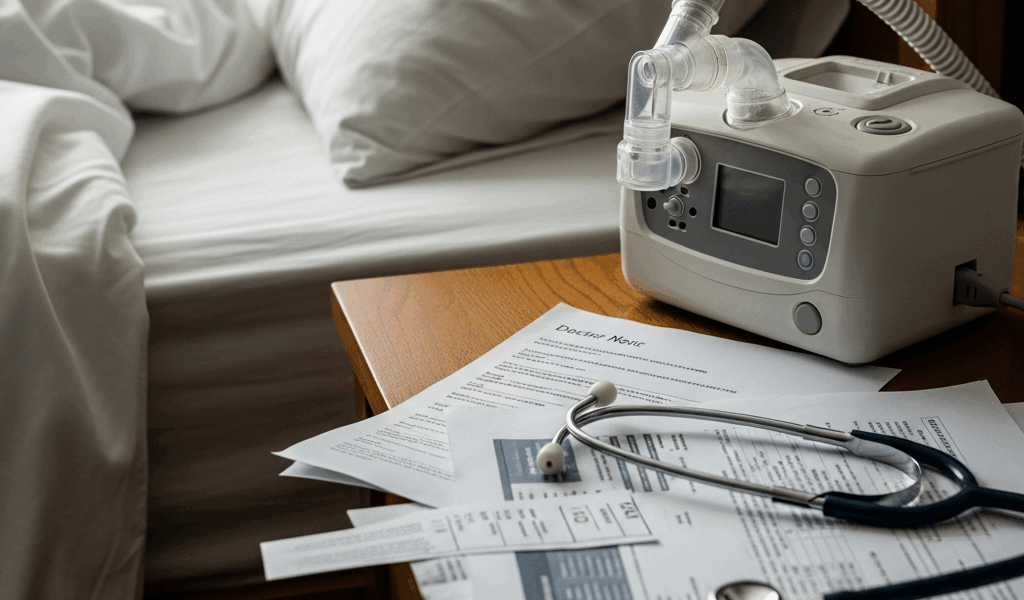
Why Sleep Apnea Claims Get Denied
Sleep apnea claims are genuinely confusing these days with all the misinformation flying around about what the VA actually wants to see. I’ve reviewed hundreds of these denials, and the pattern is almost always the same — veterans file with incomplete documentation, not because they don’t have sleep apnea, but because nobody told them what evidence actually moves the needle with raters.
Here’s what kills most claims before they even have a chance:
- No in-service event or diagnosis on record — You never saw a doctor for sleep issues while on active duty, so the VA can’t connect your current sleep apnea to service. No nexus. Claim denied.
- Weak nexus letter — Your civilian doctor submitted something, but it’s too vague. “Sleep apnea can be caused by stress” doesn’t cut it. The VA needs specific language — at least if you want a legitimate shot at service connection.
- No current CPAP prescription — Diagnosed years ago but never fitted for a machine? Raters will assume you don’t have active, measurable sleep apnea. Don’t make my mistake on this one.
- Missing sleep study results — You mention having sleep apnea, but there’s no polysomnography report in your file. Nothing objective to rate means nothing gets rated.
- Relying only on buddy statements — Your battle buddy says you snored like a diesel engine. Good detail. Still not enough on its own. The VA wants medical evidence, not anecdotes.
These gaps are fixable. Most denied claims I’ve seen were missing one or two critical documents — not because the veteran was faking it, but because the system never explained what “complete” actually looks like.
What Rating You Can Actually Get
Quick note before I keep going. The money is the motivator. Know what you’re fighting for before you fight for it.
The VA rates sleep apnea under Diagnostic Code 6847. Three possible ratings: 0%, 30%, and 50%.
The 0% Rating
You get service connection. Your sleep apnea is officially linked to your service. You receive zero monthly payment. Frustrating — but it matters more than people realize. You’ve established the connection. You can appeal for an increase later, and that foundation is already built.
The 30% Rating
Sleep apnea is diagnosed and documented, but you’re not currently using a CPAP or the VA isn’t satisfied you’ve hit the higher threshold. At 30%, you’re looking at roughly $400 to $480 per month in 2024, depending on dependents. Real money. Most veterans are aiming higher, though.
The 50% Rating
This is the target. Sleep apnea confirmed by sleep study, CPAP prescribed and actively in use. Monthly compensation runs around $900 to $1,100. The gap between 30% and 50% is approximately $500 a month — that’s $6,000 a year. That matters.
DC 6847 requires one of three conditions for 50%: chronic respiratory failure with CO2 retention, or the documented need for a CPAP device. If you have a CPAP prescription and you’re using it, you have a concrete claim. So, let’s talk about how to build one.
How to Connect Sleep Apnea to Your Service
But what is service connection, really? In essence, it’s proof that your military service caused or contributed to your current condition. But it’s much more than that — it’s the entire argument your claim rises or falls on.
Direct Service Connection
You served, something happened, sleep apnea followed. Clearest path. A service-connected TBI that preceded your sleep apnea diagnosis. An active-duty diagnosis showing up in your STRs. Burn pit exposure or other inhalation hazards — especially relevant under the PACT Act now.
If your military treatment records show fatigue complaints, sleep disturbances, or a pre-separation sleep study, you’re in good shape. Get those records first — before anything else.
Secondary Service Connection
This is where most sleep apnea claims actually succeed. Sleep apnea develops secondary to another already-rated condition. The most common links:
- PTSD — Nightmares, night sweats, hypervigilance, sleep fragmentation. These disrupt sleep architecture in documented ways, and the PTSD-to-sleep-apnea nexus is well-researched. Strong connection. Use it.
- Traumatic Brain Injury (TBI) — TBI damages the brain’s respiratory control centers. Medical literature supports this chain clearly. If you have a rated TBI, this is worth pursuing.
- Obesity secondary to another condition — If a rated condition caused weight gain — PTSD medications, mobility loss from a service-connected injury — and that weight gain contributed to sleep apnea, that’s a secondary chain. Less common, but viable.
- Agent Orange exposure — AO-related conditions like diabetes and neuropathy have been successfully argued as creating the conditions for sleep apnea to develop. Nexus letters supporting this exist and have worked.
What a Nexus Letter Must Say
A nexus letter from your civilian doctor isn’t optional. Here’s what actually wins:
- Your doctor confirms they’ve reviewed your military service records or received a detailed service history from you directly
- Your doctor identifies the specific in-service event — combat trauma, TBI diagnosis, hazardous exposure, original PTSD diagnosis — by name and approximate date
- Your doctor explains the medical mechanism. Not a guess. Medical reasoning with medical facts behind it.
- Your doctor references your current sleep apnea diagnosis and cites the actual sleep study results
- Your doctor uses the VA’s own language: “more likely than not” or “at least as likely as not” that sleep apnea is related to your service-connected condition
Vague letters get denied. That’s what makes specificity so endearing to VA raters — it leaves them nothing to argue with.
What to Include in Your Claim File
While you won’t need a legal team, you will need a handful of specific documents — and every single one has a job to do.
- Sleep study report (polysomnography) — Non-negotiable. Dates, AHI score, severity classification. An AHI of 30 or above is severe. Get that number in your file.
- CPAP prescription and compliance records — The prescription itself, plus usage data if your machine tracks it. I’m apparently a ResMed AirSense 10 user, and the app exports nightly data going back months — that compliance record works for me while self-reported logs never seem to satisfy raters the same way. If you’re using your CPAP 4+ hours per night, that’s documented evidence of an ongoing condition. Download it.
- Nexus letter from a medical doctor — Not a chiropractor. Not a naturopath. An MD, DO, or nurse practitioner credentialed in sleep medicine, neurology, or internal medicine. The VA weights these heavily.
- Military service records showing sleep complaints — Any STR entries mentioning fatigue, headaches, sleep disturbance, difficulty concentrating. Breadcrumbs showing the problem started in service.
- Buddy statements — Fellow veterans describing witnessed apnea events, your snoring, your daytime fatigue during service. These corroborate. They don’t replace medical evidence.
- Private DBQ (Disability Benefits Questionnaire) — If you’re worried about the C&P exam, have your civilian sleep doctor complete a private DBQ. It goes into your claim file and gives the rater a second supporting opinion.
- Continuous medical records — A gap from 2015 to 2023 with no sleep apnea documentation actively hurts your claim. Show a continuous chain of diagnosis and treatment wherever possible.
Organized files win claims. Disorganized files with missing pages get denied. That’s not a philosophy — it’s just what happens.
What to Do If Your Claim Was Already Denied
A denial isn’t the end. Think of it as a reset point — one where you get to resubmit with the evidence you should have had the first time around.
File a Supplemental Claim
Fresh nexus letter, new sleep study, CPAP prescription and usage data you didn’t have before — file a Supplemental Claim. You’re not starting over from scratch. The rater reviews your original file alongside the new evidence. This is the right lane if you now have the missing pieces.
Request a Higher-Level Review (HLR)
No new evidence, but you think the rater misread your existing file? HLR sends your case to a senior rater. Useful when the original decision contained a factual error. Not useful when the real problem is missing documentation — that requires a Supplemental Claim, not a re-read.
Appeal to the Board of Veterans’ Appeals (BVA)
The long game. You’re appealing the decision itself into the Veterans Court system. Eighteen months, sometimes longer. Use this lane only after Supplemental Claims and HLR have been exhausted.
For sleep apnea denials specifically, start with a Supplemental Claim. Get the nexus letter. Pull the CPAP data. File within one year of the denial and the one-year rule protects your effective date — your new evidence gets a fresh look without losing your original claim date.
Here’s what you do today. Request your military service records through ebenefits.va.gov. Schedule with a sleep medicine doctor and specifically ask for a nexus letter. No current sleep study? Book one — a basic polysomnography runs $1,500 to $3,000 out of pocket but is often covered through your private insurance. If you have a CPAP, sync the data card before your appointment. Don’t wait on any of this. The clock on that one-year window is already running.


Leave a Reply